Practical
Bangkok in the Rainy Season
The rainy season sounds worse than it is. Most days have long dry spells, prices drop and the city is greener. It just needs a different rhythm.
Updated
2 min read
How we research
In this guide ↓
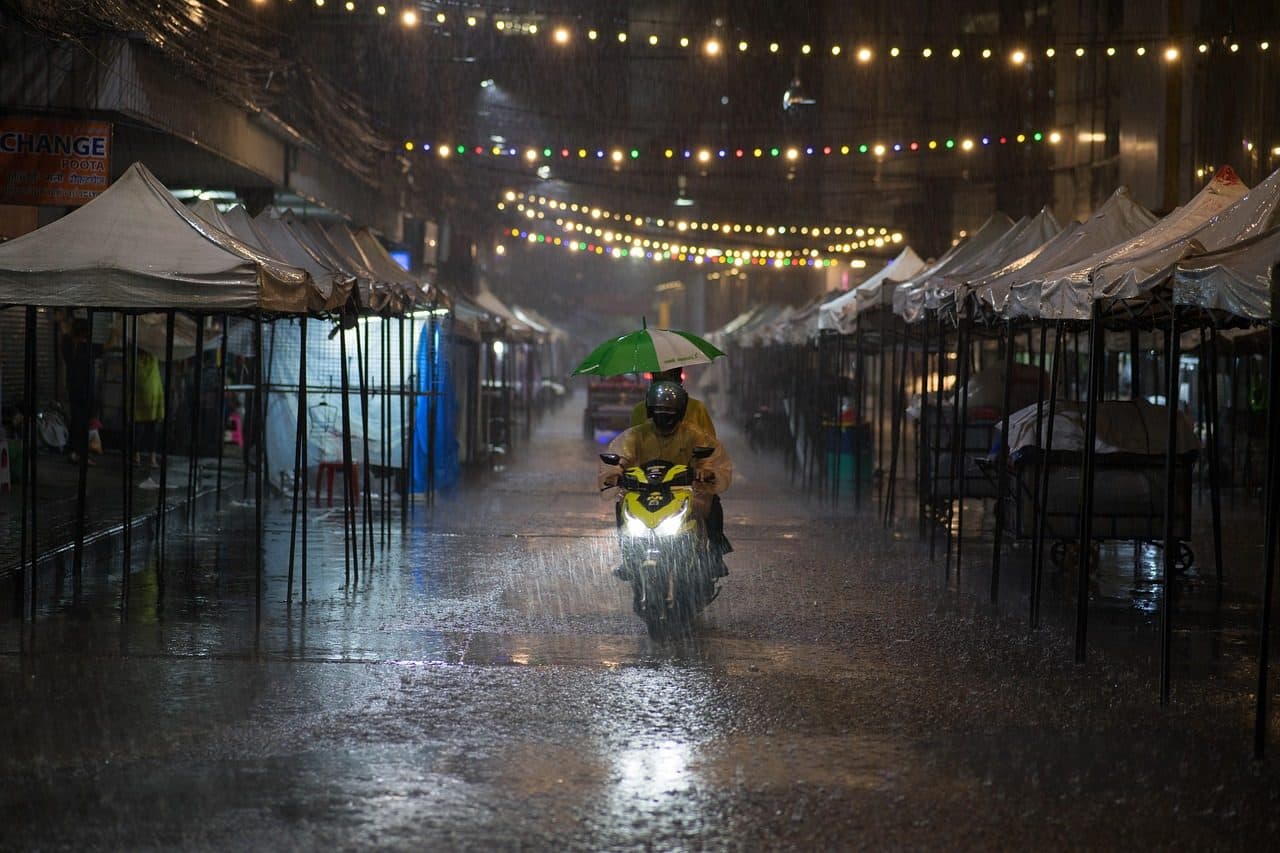
From roughly June to October, Bangkok is in its rainy season. It sounds like a reason to stay away, and for some trips it is. For most, it isn't: rain usually arrives in heavy bursts rather than all-day drizzle, hotel prices fall, and the city is greener and a little less crowded.
How the rain actually behaves
- Short, heavy downpours are the norm — often in the afternoon or evening, sometimes overnight.
- Mornings are often dry, which suits sightseeing.
- Some days have no rain at all; others are wet from morning to night, especially around September.
- It stays hot. Rain cools the air briefly, then the humidity returns.
September is often the wettest month. Rain usually eases through October.
Flooding
Heavy downpours can flood streets for an hour or two, especially in low-lying sois, until the drains catch up. It's an inconvenience rather than a danger for most visitors:
- Traffic gets worse in the rain. Taxis are harder to find and roads slow down; use the BTS and MRT, which aren't affected.
- Avoid wading through floodwater where you can — you can't see the pavement or what's in it.
- Riverside areas can see higher water levels in the late rainy season; the express boats occasionally change their service.
Planning your days
- Outdoors in the morning. Temples, markets and walks before lunch.
- Indoors in the afternoon. Have a plan for where you'll be when the rain arrives.
- Evenings are often fine once the storm has passed — night markets and rooftop bars (check for weather closures) are usually back on within an hour or two.
- Stay near the rail lines. It matters even more in the rainy season. See where to stay in Bangkok.
What to do when it pours
- Museums: Museum Siam, Jim Thompson House (the main house is under cover), the Bangkok Art and Culture Centre (closed Mondays).
- Malls and food halls: the Siam malls are connected by covered skywalks, so you can spend a whole wet afternoon there. See our shopping guide.
- A Thai massage — the classic Bangkok rainy-afternoon plan.
- A cooking class. See Thai cooking classes in Bangkok.
- The aquarium at Siam Paragon, especially with children. See Bangkok with kids.
- A Muay Thai fight night — indoors, in the evening. See watching Muay Thai.
What to pack
- A small, strong umbrella (it doubles as shade from the sun).
- Sandals or quick-drying shoes, plus one pair of closed shoes for rooftops and temples.
- Light clothes that dry quickly.
- A waterproof pouch or zip bag for your phone and passport.
- Mosquito repellent — mosquitoes are more active in the wet months.
The upsides
- Lower hotel prices, especially in August and September.
- Fewer visitors at the big sights.
- A greener city, and dramatic skies for photos.
- Rambutan, mangosteen and durian are in season in the early rainy months.
For how each month compares, see the best time to visit Bangkok.
where to next?
- Best Time to Visit BangkokBangkok is hot every month of the year. The real choice is between dry and busy, scorching, or wet and cheaper. Here's how each month actually feels.
- Bangkok With KidsBangkok is easier with children than its reputation suggests — if you plan around heat, keep mornings for sights and use the rail system instead of road traffic.
- Best Shopping in BangkokBangkok has more retail than you could visit in a month. Start from what you want to buy, then pick the place.