Food
Bangkok Street Food
Bangkok's street food is concentrated in particular streets at particular times. Knowing where and when matters more than any list of stalls, which change constantly.
Updated
6 min read
How we research
In this guide ↓
Bangkok's street food isn't spread evenly across the city. It concentrates in particular streets at particular times of day, and it's moving: more of it now happens in markets, food courts and shophouse fronts than on open pavements. So this guide focuses on where and when to go and how to choose a stall — advice that stays true even when individual vendors move or close.
The short version
| You want… | Go to | When |
|---|---|---|
| The classic street-food night out | Yaowarat, Chinatown | From about 6pm |
| Long-running shophouse cooking | The Old Town around Maha Chai Road | Lunch to early evening |
| A busy food street popular with young locals | Banthat Thong Road | Evenings |
| Easy grazing with lots of choice | A night market such as Jodd Fairs Ratchada | From about 6pm |
| A cheap, quick weekday lunch | Office districts, including Silom's side streets and food courts | Around 11:30am–1:30pm |
Where to go, and when
Yaowarat (Chinatown) — evenings
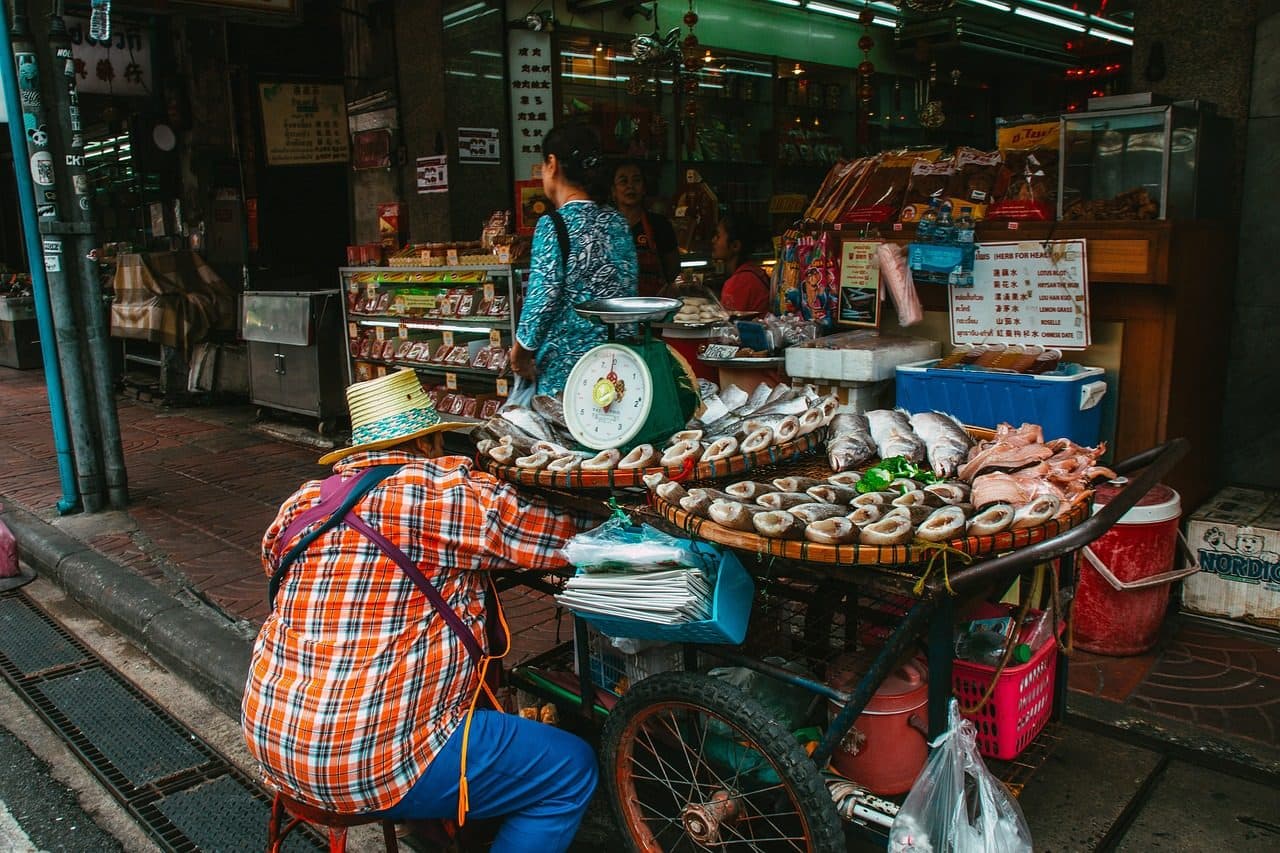
The most reliable place in Bangkok for an evening of street food, and the busiest. From late afternoon, Yaowarat Road and its side streets fill with stalls selling seafood, noodles, Chinese-Thai dishes and desserts. Expect crowds and queues at the well-known stalls, especially at weekends.
- What to order: kuay jap (rolled rice noodles in peppery broth), grilled seafood, oyster omelette, fish maw soup, Chinese desserts and bird's nest drinks.
- How to do it: take the MRT to Wat Mangkon, walk the whole length of Yaowarat Road first, then go back to what looked best. Share dishes so you can try more.
- Worth knowing: the most famous stalls draw long queues. Plenty of excellent stalls nearby don't.
Read the full Chinatown guide.
The Old Town — lunch and early evening
The streets around Maha Chai Road, Tanao Road and the Giant Swing are lined with long-running shophouse kitchens, some of them decades old. This is where you'll find Bangkok's best-known pad thai shop and Raan Jay Fai, the Michelin-starred wok stall (open Wednesday to Saturday when we checked; see the best restaurants in Bangkok).
Thipsamai · Pad thai · ฿฿
Long-running pad thai shop on Maha Chai Road, including a version wrapped in a thin egg omelette.
Evening queues are common; it is touristy, but the pad thai is a useful benchmark.
Open in Google MapsOffice districts — weekday lunch
Bangkok's office workers eat early and fast, roughly between 11:30am and 1:30pm, and the places that feed them are some of the best value in the city: rice-and-curry stalls, noodle shops, grilled meats and fruit. In Silom, look in the side streets (sois) off Silom Road and Convent Road and in office-building food courts. Pavement stalls here have been cut back by city clearances over the years, so expect a mix of street stalls, shophouses and food courts rather than a solid row of carts. It's much quieter at weekends. See the Silom guide.
Victory Monument — boat noodles
The canal-side lane just off the Victory Monument roundabout (BTS Victory Monument) has long been known for a cluster of boat-noodle shops serving small bowls of rich pork or beef broth. Bowls are small, so order several. Recent listings still describe the cluster, but individual shops' hours vary and change; go at lunchtime or early evening.
Banthat Thong Road — evenings
Banthat Thong Road runs north from Rama IV Road past Chulalongkorn University towards the National Stadium area. Once known for sportswear and car-parts shops, it filled with food businesses after the pandemic, helped by a university-led redevelopment, and is now one of the city's busiest food streets. Expect long-established shophouses next to newer places popular with students and young professionals, and queues at the best-known spots in the evening. Take the MRT to Sam Yan or the BTS to National Stadium.
Night markets — evenings
For easy grazing with plenty of choice, a night market is hard to beat. Jodd Fairs Ratchada is the easiest to reach, on the MRT. Expect leng zaab (a spicy pork-bone soup that comes as a heap of bones), grilled seafood and desserts.
How to choose a good stall
- Look for a queue of locals, especially office workers at lunchtime.
- Specialists beat all-rounders. A stall that does one dish, all day, usually does it well.
- Food cooked to order in front of you is safer than food that's been sitting.
- High turnover means fresh ingredients.
- Check the condiments. A clean, well-stocked condiment tray is a good sign.
What to order first
If you only eat a handful of street dishes, start with these:
- Pad kra pao with a fried egg (kra pao khai dao)
- Khao man gai (Hainanese-style chicken rice)
- Som tam (green papaya salad) with gai yang (grilled chicken) and sticky rice
- Boat noodles — several small bowls
- Moo ping (grilled pork skewers), a classic breakfast
- Mango sticky rice, in season (roughly March to May)
For more dishes and how Thai meals work, see the Bangkok food guide.
How to order and pay
- Point and smile. Many stalls have pictures or the ingredients on display.
- Spice level: mai phet means not spicy, phet nit noi means a little spicy.
- Cash only at most stalls. Carry small notes and coins.
- Sit where you can. Plastic stools and shared tables are normal; you'll often pay the stall you ordered from, not the table.
Vegetarian and dietary needs
The essentials are below; for more, including Jain diets and where to eat, see vegetarian and Jain food in Bangkok.
- Look for the yellow flags with red Thai lettering (เจ, jay). They mark vegan-style Buddhist food without meat, fish, dairy, eggs, garlic or onion — especially common during the Vegetarian Festival in Chinatown in late September or October.
- Ask for no meat: mai sai neua sat. But fish sauce, shrimp paste and oyster sauce are in many dishes, so a plain stall isn't always vegetarian even without visible meat.
- Peanuts and shellfish turn up in many dishes and sauces. With a serious allergy, carry a written explanation in Thai and keep to dishes cooked in front of you.
Eating safely
Street food in Bangkok is generally safe. Most problems come from the heat and from things that have been sitting out.
- Favour busy stalls with food cooked to order.
- Be cautious with raw seafood and with dishes that have been standing in the heat.
- Ice served at restaurants and established stalls generally comes from commercial ice factories. If you have a sensitive stomach, skip it at very small vendors.
- Carry hand sanitiser — handwashing facilities are rare.
Should you take a food tour?
A food tour is worth it if you're short on time, nervous about ordering, or want the stories behind the dishes — see Bangkok food tours for how to choose. It's less necessary in Yaowarat, which is easy to explore alone. Look for small groups and a clear list of stops.
Questions people ask
Is Bangkok street food safe to eat?
Generally, yes. Choose busy stalls with high turnover where food is cooked to order in front of you, and be more careful with raw seafood, food that has been sitting in the heat, and ice at very small vendors.
Where is street food still easy to find in Bangkok?
Yaowarat in Chinatown and the night markets in the evening are the most reliable, along with Banthat Thong Road. City pavement clearances have reduced street-side stalls elsewhere, so office-district lunches are now a mix of stalls, shophouses and food courts.
where to next?
- Bangkok Food GuideBangkok rewards curiosity more than reservations. This is the overview: what to eat, how ordering works, and which part of the city to go to for which kind of meal.
- Bangkok Chinatown (Yaowarat)Chinatown is two places: a hectic wholesale district by day and one of the world's great street-food streets by night. Plan for both.
- Best Markets in BangkokMarkets are where Bangkok is most itself. The trick is matching the market to the day: some only open at weekends, others only come alive after dark.
- Silom, BangkokSilom works hard by day and plays by night. It is one of the best-value bases in central Bangkok, with both the BTS and MRT on hand.