Neighbourhood guide
Bangkok Old Town (Rattanakosin)
The historic royal heart of the city, and where most first trips begin. It is also more pleasant to stay in than most visitors assume.
Updated
7 min read
How we research
In this guide ↓
Best for
- First-time visitors focused on sightseeing
- Temple and history lovers
- Early risers
Less suited to
- Travellers who want BTS Skytrain access
- Late-night bar hoppers (outside Khao San)
- Mall shopping
Getting there
- Sanam Chai · MRT Blue LineClosest station to Wat Pho and the Grand Palace
- Sam Yot · MRT Blue LineHandy for Wat Suthat, the Giant Swing and Wat Saket
- Tha Chang (N9) / Tha Tien (N8) · Chao Phraya Express Boat
- Nightlife
- some
- First-time visitors
- Good
- Families
- OK
- Hotel budgets
- budget, mid-range, luxury
Nearby: Chinatown (Yaowarat), Riverside (Charoen Krung & Khlong San)
What is the Old Town like?
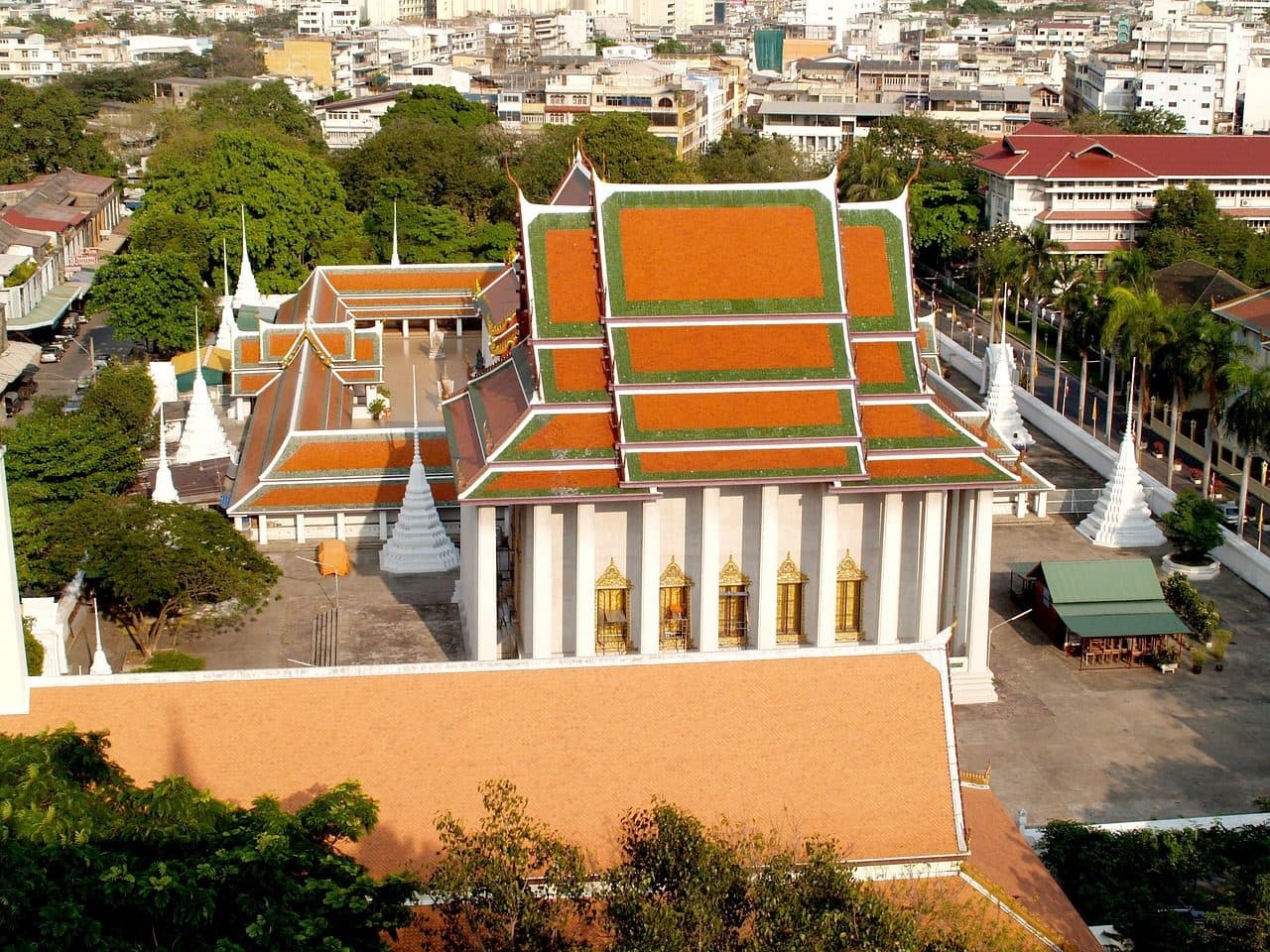
Bangkok's Old Town sits on Rattanakosin Island, an area enclosed by the river and a ring of canals where King Rama I founded the capital in 1782. It holds the Grand Palace, Wat Pho and many of the city's most important temples, government buildings and museums. Beyond the monuments it's low-rise and surprisingly local: shophouses selling Buddhist supplies, long-running restaurants and quiet lanes near the river.
Daytime is busy around the big sights and calm everywhere else. After dark it's quiet except for Khao San Road and the bars of Phra Athit Road.
Where is it, and how do you get there?
The Old Town is in the west of central Bangkok, on the east bank of the Chao Phraya River. Until recently it had no rail stations, but the MRT Blue Line extension changed that:
- MRT Sanam Chai — for Wat Pho, Museum Siam, the flower market and the Grand Palace (a 15-minute walk).
- MRT Sam Yot — for Wat Suthat, the Giant Swing and the Golden Mount.
- Chao Phraya Express Boat to Tha Chang — for the Grand Palace and the Bangkok National Museum.
- River boats — Tha Tien (Wat Pho, ferry to Wat Arun), Tha Chang (Grand Palace) and Phra Arthit (Khao San). From the Riverside hotels and BTS Saphan Taksin, the boat is often the quickest route.
Best things to do
The big three
The Grand Palace and Wat Phra Kaew, Wat Pho and Wat Arun (just across the river) are the reason most visitors come. Do them in that order, starting at the palace's 8:30am opening. Our temples guide covers each in detail.
The Grand Palace & Wat Phra Kaew
The former royal residence and the Temple of the Emerald Buddha, Thailand's most sacred temple.
2–3 hours · Best time: at opening (8:30am) · Sanam Chai (MRT Blue Line)
Wat Pho
Home of the 46-metre Reclining Buddha and the traditional school of Thai massage.
1–1.5 hours · Best time: late afternoon · Sanam Chai (MRT Blue Line)
The quieter Old Town
Spend a second morning on the temples most visitors miss. The Golden Mount, Loha Prasat and Wat Suthat are within a short walk of one another and far less crowded.
Wat Saket (The Golden Mount)
A gilded chedi on an artificial hill, reached by a spiral staircase of around 300 steps.
45 minutes · Best time: late afternoon for the light · Sam Yot (MRT Blue Line)
Wat Suthat & the Giant Swing
A large royal temple with an exceptional main hall, beside the red Giant Swing frame.
45 minutes · Best time: any time · Sam Yot (MRT Blue Line)
Museums and markets
- Museum Siam, beside MRT Sanam Chai, is a modern, interactive introduction to Thai identity.
- Pak Khlong Talat, the flower market, runs all day and night but is best late in the evening or very early in the morning.
- The Amulet Market, near Tha Chang, is where collectors trade Buddhist amulets — fascinating to wander, though not a place for casual souvenir shopping.
Where to eat
The Old Town is home to some of Bangkok's longest-running shophouse restaurants, especially along and around Maha Chai Road and Tanao Road. This is where you'll find the famous pad thai of Thipsamai and Raan Jay Fai's Michelin-starred wok cooking.
Raan Jay Fai · Thai street food (wok) · ฿฿฿฿
Crab omelette and drunken noodles cooked over charcoal by Jay Fai herself; holds a Michelin star.
Prices are far above normal street food and waits can run to hours. Worth it for the experience, not for value.
- Open
- Wednesday–Saturday, daytime; walk-in queue system (checked October 2026)
Thipsamai · Pad thai · ฿฿
Long-running pad thai shop on Maha Chai Road, including a version wrapped in a thin egg omelette.
Evening queues are common; it is touristy, but the pad thai is a useful benchmark.
Open in Google MapsAround Tha Tien and Tha Chang, simple riverside restaurants make a convenient lunch between temples, and the area also has some of the city's best fine dining — see the best restaurants in Bangkok. For more, see our street food guide.
Nightlife
- Khao San Road is the backpacker strip: loud music, cheap buckets of cocktails and street food. Fun for an evening if you're nearby — see Khao San Road.
- Phra Athit Road, one street away by the river, is calmer, with small bars, live music and a mix of Thai students and travellers.
- Wat Arun at night, seen from the Tha Tien side, is one of the best free sights in Bangkok.
Shopping
The Old Town isn't a shopping district. The streets around Wat Suthat sell Buddhist supplies, and Khao San has the usual souvenir stalls. For serious shopping, head to Siam or Chatuchak.
Staying in the Old Town
Staying here means you can reach the temples before the crowds and return to your hotel at midday. Options range from guesthouses around Khao San to boutique hotels in restored shophouses near the river.
Advantages
- Walk to the Grand Palace, Wat Pho and the river
- Beautiful in the early morning and evening
- Good-value accommodation
- MRT and river boats now connect it to the rest of the city
Disadvantages
- No BTS Skytrain; journeys to Sukhumvit take 30–40 minutes
- Few malls and international restaurants
- Quiet at night (unless you're on Khao San)
When to visit
Mornings, when the temples open and the heat is lower. The Grand Palace is busiest from mid-morning to early afternoon. Wat Arun is best seen at sunset from the opposite bank.
Nearby
Walk or take the MRT to Chinatown, take the river boat to the Riverside, or read about the river itself.
where to next?
- Best Temples in BangkokYou don't need to see ten temples. You need to see the right three, in the right order, and maybe one quiet one where you can actually sit down.
- Bangkok Chinatown (Yaowarat)Chinatown is two places: a hectic wholesale district by day and one of the world's great street-food streets by night. Plan for both.
- The Chao Phraya RiverThe river is the fastest way between the Old Town, Chinatown and the riverside hotels, and the most pleasant one. Once you understand the boats, it changes how you plan the city.