Things to do
Thai Massage in Bangkok
A Thai massage is part stretching, part pressure, and nothing like a spa rub-down. Here's how to find a good one, and what happens when you lie down.
Updated
2 min read
How we research
In this guide ↓
Thai massage — nuad thai — is a traditional practice with roots in Buddhist medicine, recognised by UNESCO as part of humanity's intangible cultural heritage. It's done fully clothed on a mat, with the therapist using hands, elbows, knees and feet to apply pressure along the body's energy lines and to stretch you into positions you might not expect. It's often described as "lazy yoga". You'll feel looser afterwards, and possibly a little sore.
Bangkok has massage shops on almost every street. Most are good, inexpensive and a perfect way to spend a hot afternoon.
The main types
| Type | What it is | Good for |
|---|---|---|
| Thai massage | Pressure and stretching, fully clothed | Stiffness after long flights and walking days |
| Foot massage | Reflexology-style pressure on feet and lower legs | Tired feet; a gentle first massage |
| Oil massage | Smoother, with oil, more relaxing | Relaxation; less stretching |
| Herbal compress | Warm herb bundles pressed onto the body | A traditional extra, often added to Thai massage |
| Neck, back and shoulder | Focused on upper-body tension | Desk workers and heavy bags |
What it costs
- Neighbourhood massage shops: typically a few hundred baht for an hour. Prices are usually posted outside.
- Wat Pho's massage school: the temple's official price list showed 520 THB for a one-hour Thai massage (and the same for foot massage) when we checked in October 2026.
- Hotel and luxury spas: many times more, with a calmer setting.
A tip of around 50–100 THB after an hour at a regular shop is customary.
Wat Pho: the classic choice
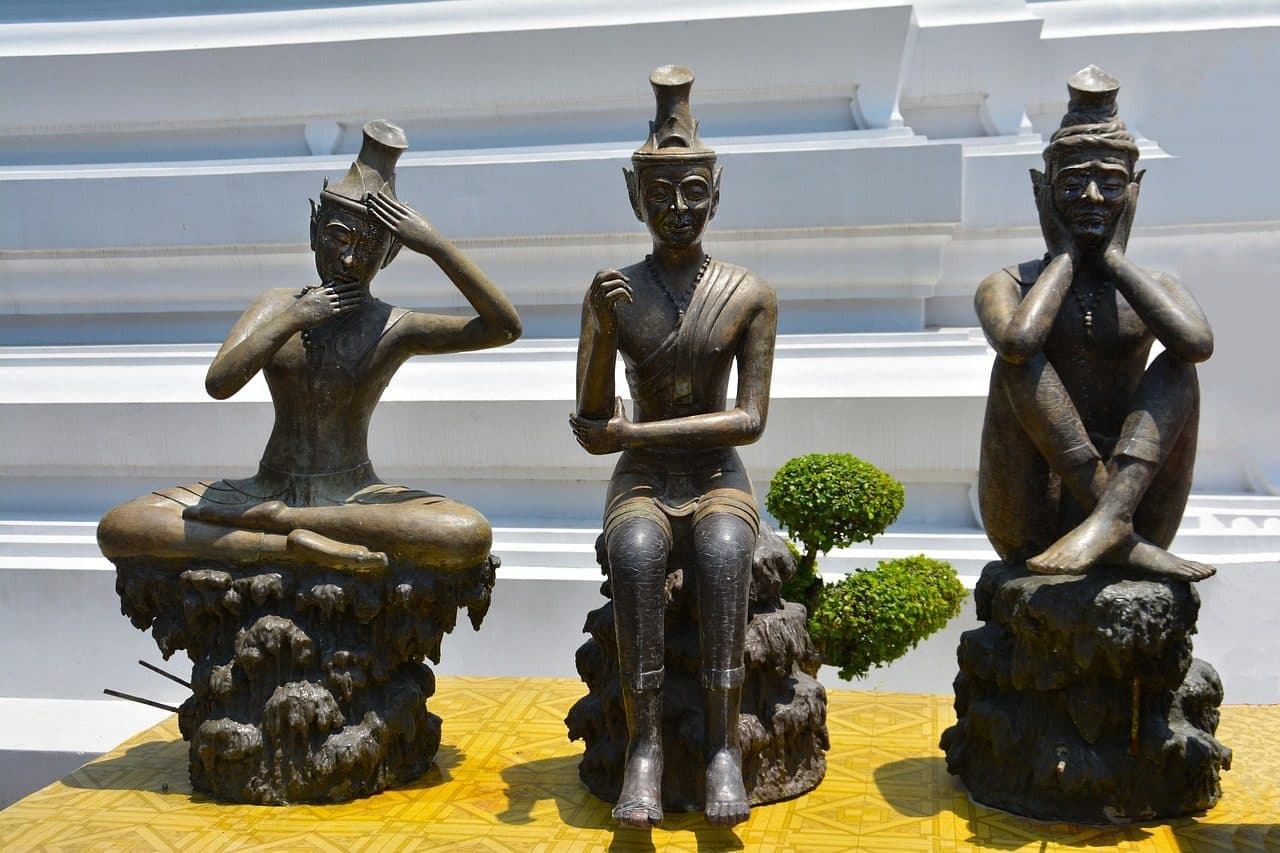
Wat Pho is home to a traditional massage school, and its massage pavilions inside the temple grounds are the most famous place in Bangkok to get a Thai massage. Expect a wait at busy times — you register and take a number. The statues of hermits in yoga-like poses around the temple grounds illustrate traditional stretching and massage postures. See our Wat Pho guide.
How to choose a good shop
- Look for a posted price list and a clean, quiet interior.
- Busy with Thai customers is a good sign.
- Avoid places with staff calling out to passing men, especially late at night in nightlife areas — some offer more than massage.
- Mats or reclining chairs: Thai massage is on a mat; foot massage in a reclining chair.
What to expect
- You'll usually have your feet washed first.
- For Thai massage, you'll be given loose clothes to change into.
- The therapist will ask about pressure. Say bao bao for gentle, nak nak for strong.
- Speak up if anything hurts — firm is fine, pain isn't.
- Drink water afterwards.
Who should be careful
Thai massage involves strong pressure and stretching. Skip it or choose a gentle foot or oil massage if you're pregnant, have a recent injury, back problems, high blood pressure or other medical conditions, and tell the therapist about any concerns.
For rainy afternoons, see our Bangkok rainy season guide; for more ideas, things to do in Bangkok.
Questions people ask
How much is a Thai massage in Bangkok?
Neighbourhood massage shops typically charge a few hundred baht for an hour. At Wat Pho's massage school, the official price list showed 520 THB for a one-hour Thai massage when we checked in October 2026. Hotel spas charge many times more.
Should I tip after a massage in Bangkok?
Yes, tipping your therapist is customary — commonly 50–100 THB after an hour at a regular shop, more at a spa.
where to next?
- Wat PhoMost visitors spend twenty minutes here, photograph the Reclining Buddha and leave. The temple rewards an hour more — and a massage at the end.
- Best Things to Do in BangkokThirty-plus experiences, grouped the way you will actually plan them: by what they are and where they are. Each one says who it suits, how long it takes and what to pair it with.
- Bangkok in the Rainy SeasonThe rainy season sounds worse than it is. Most days have long dry spells, prices drop and the city is greener. It just needs a different rhythm.